
Leading AI Models for Healthcare: AI Patient Chart Review for Clinics and the Top Open Source Medical LLMs of 2024
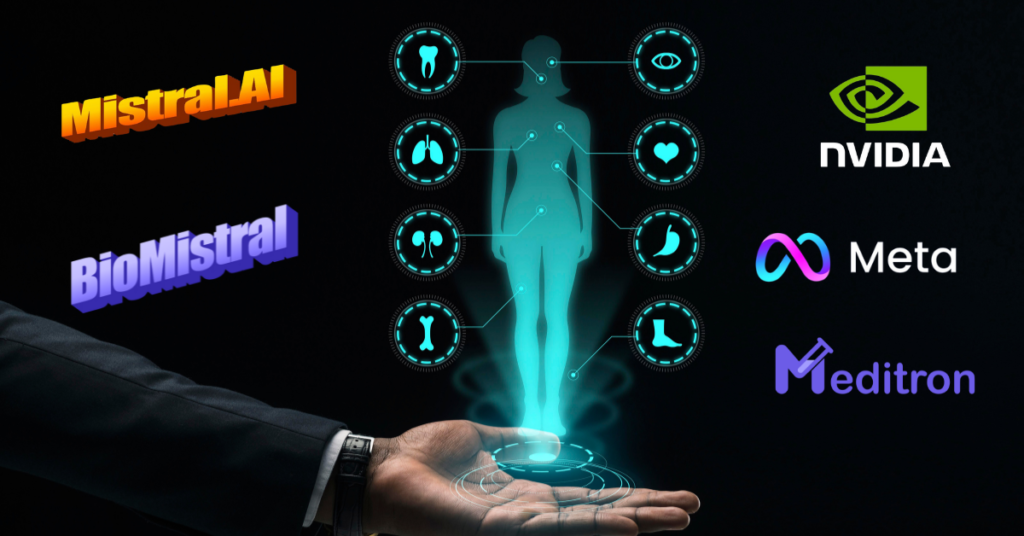
AI patient chart review for clinics is revolutionizing how healthcare professionals manage and analyze patient data, streamlining workflows and improving the accuracy of clinical decision-making. In an era where technology continues to redefine the boundaries of healthcare, Artificial Intelligence (AI) emerges as a pivotal force in transforming clinical operations and patient care. The year 2024 marks a significant advancement in the integration of AI into healthcare systems, particularly through the use of open-source Large Language Models (LLMs). These AI models are not just tools; they are revolutionary assets that enable healthcare professionals to achieve greater efficiency and accuracy. From synthesizing complex patient data to enhancing real-time decision-making, the potential of AI in healthcare is immense and ever-expanding.
The power of AI extends into the critical realm of clinician workflows, where precision and efficiency are paramount. AI patient chart review for clinics enables seamless integration of patient data, automating processes and ensuring higher levels of care. AI patient chart review for clinics, powered by open-source LLMs, offers a unique advantage with customizable, scalable solutions tailored to the specific needs of healthcare facilities. AI patient chart review for clinics enables a seamless flow of information, transforming multimodal data—including electronic health records, audio conversations, and images—into actionable insights for clinicians. Through AI patient chart review for clinics, AI models automate and optimize clinical workflows, allowing healthcare providers to focus more on delivering top-notch patient care.
Table of Contents
LLMs for Clinical Workflow Automation
Introduction to LLMs and Their Role in Healthcare
Large Language Models (LLMs) stand out among AI technologies for their ability to understand and generate human-like text, making them particularly valuable in healthcare settings. These advanced AI models can process and analyse extensive unstructured data from various sources, such as electronic health records (EHRs), doctor-patient conversation recordings, and medical imaging. By integrating LLMs, healthcare providers can harness these data streams to enhance diagnosis, treatment planning, and patient care, all while ensuring a higher degree of precision and efficiency.
AI patient chart review for clinics powered by LLMs goes beyond data processing, decoding the complexities of medical language and patient information for more effective clinical decision-making. This capability is crucial for extracting actionable insights from EHRs, which are often laden with unstructured text that can be challenging to navigate. AI patient chart review for clinics automates data extraction and interpretation, reducing cognitive load on clinicians and freeing them up to focus more on patient care. One such research has been done by researchers at the Stanford recently that can be found here: https://www.nature.com/articles/s41591-024-02855-5
Benefits of Automating Clinician Workflows with AI
AI patient chart review for clinics powered by LLMs significantly reduces clinician burnout by automating tedious tasks like chart reviews and analysis. Healthcare professionals frequently face the daunting task of sifting through overwhelming amounts of data, which can lead to fatigue and reduce the quality of patient care. AI-driven tools like LLMs can automate tasks such as manual chart reviews, analysis, and even preliminary diagnosis, thereby freeing up clinicians’ time and reducing their cognitive burden.
With AI patient chart review for clinics, the automation extends to interpreting doctor-patient interactions, providing clinicians with detailed insights for better patient care. AI models can transcribe, translate, and analyse spoken content, providing clinicians with succinct synopses and relevant medical insights derived from conversations. This not only improves the accuracy of medical records but also enhances the understanding of patient concerns and conditions, leading to better-informed decision-making.
Top 5 Open Source LLMs in Healthcare
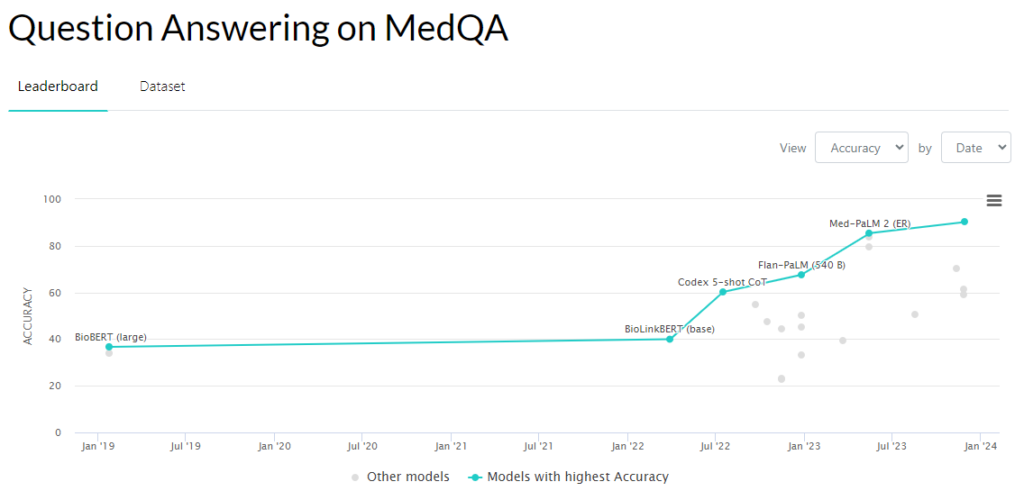
Among the myriad of applications, one significant benchmark for evaluating medical specific LLMs is their performance in “Question Answering on MedQA”. This involves using LLMs to interpret and answer complex medical questions. Our exploration includes models that have shown promising results in academic and practical applications, similar to the research and development conducted by Sporo Health, which emphasizes automating clinical workflows and enhancing data-driven decisions.
Meditron 70B: A Pioneering AI in Medical Reasoning
Meditron 70B represents the forefront of AI-driven healthcare solutions, specifically designed to tackle the complexities of medical data and reasoning. As a standout in the suite of open-source Large Language Models (LLMs), Meditron 70B boasts an impressive 70 billion parameters, underscoring its capability to process and analyse extensive medical data. AI patient chart review for clinics, such as Meditron 70B, is the result of pretraining on diverse medical data, enhancing its ability to process and analyze complex patient information. This corpus includes not just selected PubMed articles and abstracts, but also incorporates a new dataset of internationally-recognized medical guidelines, and general domain data from RedPajama-v1.

The refinement and specialization of Meditron 70B have been meticulously directed towards enhancing its applicability and effectiveness in the medical field. By finetuning on relevant training data, Meditron 70B significantly outperforms predecessors and contemporaries like Llama-2-70B, GPT-3.5 (text-davinci-003, 8-shot), and Flan-PaLM across a variety of medical reasoning tasks.
Find link here: https://paperswithcode.com/paper/meditron-70b-scaling-medical-pretraining-for
BioMistral 7B: Advancing Biomedical Insights with AI
BioMistral 7B emerges as a cutting-edge solution within the sphere of Large Language Models (LLMs) tailored specifically for the biomedical domain. Built upon the robust foundation of the general-purpose Mistral model, BioMistral has been meticulously pre-trained on an extensive collection from PubMed Central, enhancing its relevance and efficacy in medical contexts. This specialized training equips BioMistral to adeptly handle a wide array of biomedical data, effectively translating complex medical information into actionable insights, which is crucial for clinical decision-making and advancing medical research.

AI patient chart review for clinics using models like BioMistral 7B excels in medical question-answering tasks, surpassing existing models in both accuracy and reliability. Furthermore, the model’s capability extends beyond English, as it has been evaluated in seven additional languages, marking a significant stride in multilingual medical LLM applications. This extensive testing underscores BioMistral’s potential to transform healthcare outcomes globally by providing consistent and reliable AI-powered insights across diverse linguistic landscapes.
Find the link here: https://huggingface.co/BioMistral/BioMistral-7B
MedAlpaca 7B: Enhancing Medical Dialogue with AI
MedAlpaca 7B is a specialized Large Language Model (LLM) with 7 billion parameters, fine-tuned specifically for the medical domain. Originating from the foundational LLaMA architecture, MedAlpaca is meticulously engineered to excel in question-answering and medical dialogue tasks. This model stands as a pivotal tool in healthcare AI, facilitating more efficient and accurate exchanges between medical professionals and AI systems, and improving the accessibility and quality of information available for patient care and decision support.

The training regimen for MedAlpaca 7B is extensive and diverse, incorporating multiple data sources to refine its capabilities. Utilizing Anki flashcards for generating medical questions, Wikidoc for creating question-answer pairs, and StackExchange to mine high-quality interactions across various health-related categories, MedAlpaca’s training is robust. This model also incorporates a significant dataset from ChatDoctor, consisting of 200,000 question-answer pairs, which further enhances its precision and factual accuracy in medical dialogues. Through these diverse training inputs, MedAlpaca 7B is poised to significantly contribute to AI’s role in transforming medical communication and information retrieval.
Find the link here: https://huggingface.co/medalpaca/medalpaca-7b
BioMedGPT: Bridging Biological Modalities with AI in Biomedicine
BioMedGPT represents a groundbreaking advancement in the field of biomedicine through its innovative use of multimodal generative pre-trained transformers (GPT). As a pioneering model in this sector, BioMedGPT is designed to seamlessly bridge the gap between complex biological modalities—such as molecules, proteins, and cells—and human natural language. This capability enables users to interact with the “language of life” using free text, facilitating a unique and effective communication channel within biomedical research and practice. By aligning different biological modalities with natural language, BioMedGPT enhances the accessibility and interpretability of biomedical data, paving the way for more intuitive and productive scientific exploration.
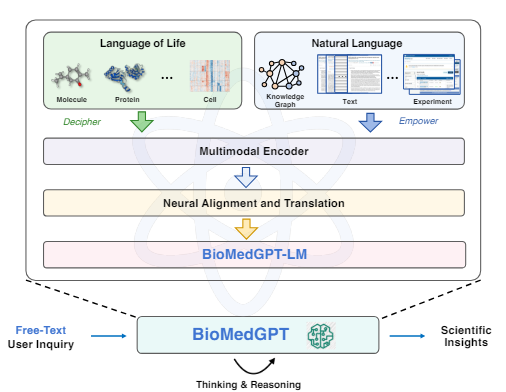
BioMedGPT-10B, a specific iteration of this model, unifies the feature spaces of molecules, proteins, and natural language, enabling precise encoding and alignment. This model has demonstrated impressive performance, matching or surpassing both human experts and larger general-purpose models in biomedical question-answering tasks. BioMedGPT’s capabilities extend to specialized areas such as molecule and protein QA, which are critical for accelerating drug discovery and the identification of new therapeutic targets. The model and its resources, including the specialized PubChemQA and UniProtQA datasets, are open-sourced, making them accessible for further research and development in the community, reflecting a significant step forward in the integration of AI into biomedicine.
Find the link here: https://paperswithcode.com/paper/biomedgpt-open-multimodal-generative-pre
MedPaxTral-2x7b: A Synergistic Approach to Medical LLMs
MedPaxTral-2x7b stands as a testament to the innovative strides in medical AI, representing a sophisticated Mixture of Experts (MoEs) approach by integrating the strengths of three leading models: BioMistral, Meditron, and MedAlpaca. Developed using the MergeKit library, this model exemplifies cutting-edge technology in seamlessly merging multiple AI models to enhance their individual capabilities into a single, robust Large Language Model. This amalgamation not only increases the model’s efficiency and effectiveness in processing and analyzing medical data but also significantly advances the capabilities for automating clinician workflows.
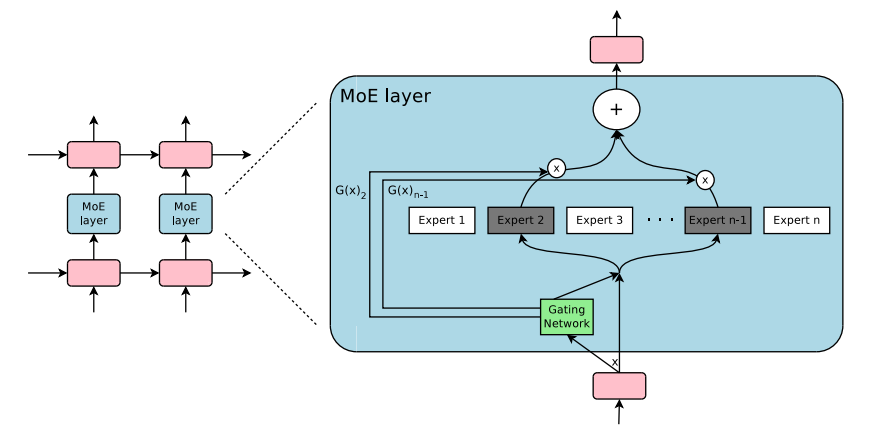
MedPaxTral-2x7b, a research-based initiative from Sporo Health, underscores the organization’s commitment to leveraging in-house developed medical LLMs to optimize healthcare operations and support clinical decision-making, reflecting a profound dedication to improving healthcare delivery through advanced AI technologies.
Conclusion
AI patient chart review for clinics is rapidly becoming a cornerstone of modern healthcare, offering unprecedented opportunities for improving patient care and operational efficiency. By utilizing AI patient chart review for clinics, healthcare providers can automate the tedious and error-prone task of reviewing patient records, freeing up clinicians to focus on more critical aspects of patient care.
This process relies heavily on AI patient chart review for clinics, which integrates data from various sources—such as electronic health records, diagnostic reports, and physician notes—into a unified platform. The ability to leverage AI patient chart review for clinics enables healthcare teams to access accurate, timely insights, driving better clinical outcomes. As the adoption of AI patient chart review for clinics continues to rise, it promises to become an integral tool in transforming healthcare systems, reducing administrative burdens, and enhancing patient satisfaction across the board.
Selecting the right Large Language Model (LLM) for healthcare applications involves a careful consideration of various factors such as specific use cases, model alignment with clinical needs, and the practicality of integrating these technologies into existing systems. Effective implementation often requires trial and error experimentation to ensure that the models not only fit the theoretical requirements but also perform effectively in real-world scenarios. At Sporo Health, we prioritize the meticulous selection and alignment of LLMs to meet the nuanced demands of the medical industry. By fine-tuning these models for specific downstream tasks, we aim to maximize their efficiency and applicability in enhancing clinical workflows and improving patient outcomes.
AI patient chart review for clinics is reshaping healthcare systems by simplifying the management of patient data and enhancing clinical decision-making. This transformative technology uses AI-powered tools to automate the analysis of medical records, enabling healthcare providers to streamline workflows and focus more on patient care. By utilizing AI patient chart review for clinics, healthcare professionals can quickly access accurate, data-driven insights, ultimately improving the quality of care delivered to patients. The integration of AI patient chart review for clinics is crucial in the modern healthcare environment, where data overload can hinder timely and effective decision-making.
The use of AI in patient chart reviews not only saves time but also helps reduce the chances of human error in interpreting complex medical information. AI patient chart review for clinics integrates large datasets, including electronic health records, medical images, and audio from doctor-patient conversations, transforming them into useful insights. This continuous automation of clinical workflows through AI allows clinicians to provide more efficient care, ensuring that patient data is handled with precision and timeliness. As AI patient chart review for clinics continues to evolve, the potential to enhance both the efficiency and effectiveness of clinical operations becomes more evident, offering a promising future for healthcare delivery.
For healthcare organizations looking to leverage the latest advancements in AI for improved healthcare delivery, Sporo Health offers tailored solutions that are at the forefront of medical technology. We invite you to book a demo today to explore how our specialized LLMs can transform your clinical operations and help you achieve optimal results. Reach out to us for a quick demonstration, and see first-hand the potential of these powerful tools in revolutionizing the healthcare landscape.