
5 Powerful Benefits of Our AI Agents for Physician Workflow Automation and EHR-Integrated Clinical Documentation
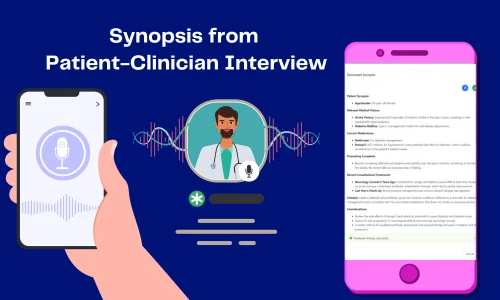
AI Agents for Physician Workflow Automation and EHR-Integrated Clinical Documentation are transforming how clinicians manage patient interactions and streamline medical documentation. In the fast-evolving landscape of digital healthcare, leveraging AI Agents for Physician workflow automation and EHR-Integrated clinical documentation is pivotal to ensuring optimal efficiency, seamless communication, and more effective care. At Sporo Health, we have developed an innovative product that generates insights, synopses, and various clinical notes from patient-clinician interviews. Utilizing an open-source, near real-time speech-to-text model for transcription, followed by a domain-specific language model (LLM) fine-tuned for the medical field, our solution orchestrates these processes seamlessly using AI-Agents. This tool also integrates with Electronic Health Records (EHRs), providing historical data for richer context and more accurate insights.
Table of Contents
The Importance of Patient-Clinician Interviews
Patient-clinician interviews are fundamental to the diagnostic and treatment processes across various medical specialties, and AI Agents for Physician Workflow Automation and EHR-Integrated Clinical Documentation can significantly enhance the quality and efficiency of these interactions. For instance, in psychiatry, these interviews are critical for understanding a patient’s mental health status, diagnosing conditions, and formulating therapy plans. Psychiatrists rely heavily on detailed patient interactions to gather information about symptoms, personal history, and emotional well-being, which are essential for effective treatment. Similarly, other specialties like oncology, cardiology, and primary care use these interviews to tailor treatments and monitor patient progress.
However, accurately documenting these interviews remains a significant challenge, often burdening healthcare professionals with extensive administrative tasks. This documentation is crucial not only for maintaining comprehensive patient records but also for ensuring continuity of care. The process can be time-consuming, detracting from the time clinicians could spend with patients. Therefore, efficient and accurate documentation tools are essential to streamline this workflow, enhancing both the quality of care and the clinician’s ability to focus on patient interactions.
The Role of Digital Healthcare in Modern Medicine

Digital healthcare solutions, especially AI Agents for physician workflow automation and EHR-integrated clinical documentation, are transforming how medical services are delivered. Telemedicine, particularly in remote areas, is one of the most significant use cases. AI Agents for Physician Workflow Automation and EHR-Integrated Clinical Documentation can facilitate telehealth by providing real-time transcription and analysis of patient interviews, ensuring that even those in underserved regions receive high-quality care. By streamlining documentation, these tools enable clinicians to focus more on patient care rather than paperwork.
How Our AI-Agents Streamline Workflows
Our solution addresses the inefficiencies in traditional documentation processes, offering AI Agents for physician workflow automation and EHR-Integrated clinical documentation to streamline and optimize these workflows. The workflow begins with real-time transcription of patient-clinician interactions using advanced speech-to-text models. Following this, our AI Agents for Physician Workflow Automation and EHR-Integrated Clinical Documentation, powered by domain-specific LLMs, processes the transcriptions to generate clinical notes, summaries, and insights. The entire process is managed by AI-Agents that ensure accuracy and efficiency. By integrating with EHR systems, our tool pulls relevant historical data, enriching the context and aiding in more informed clinical decisions by slashing the hallucination tendency associated with LLMs.
Benefits of Our AI Agents for Physician Workflow Automation and EHR-Integrated Clinical Documentation
- Improved Accuracy and Efficiency: With AI Agents for Physician Workflow Automation and EHR-Integrated Clinical Documentation, our solution automates transcription and note generation, reducing errors and freeing up clinicians’ time.
- Enhanced Patient Care: Clinicians can focus more on patient interactions and less on administrative tasks.
- Access to Historical Data: Integration with EHRs allows for comprehensive insights by leveraging past medical records.
- Scalability and Flexibility: Our tool is available as a standalone product, a Software as a Service (SaaS), or as an extension, making it adaptable to various healthcare environments.
- Cost-Effective: By integrating AI Agents for Physician Workflow Automation and EHR-Integrated Clinical Documentation, reducing the time spent on documentation translates to significant cost savings for healthcare providers.
Compliance and Security in AI Healthcare Solutions
At Sporo Health, we prioritize compliance and security. Our tool, AI Agents for Physician Workflow Automation and EHR-Integrated Clinical Documentation, being open-source, allows for transparency and flexibility while ensuring compliance with healthcare regulations. Available as a standalone product, a SaaS solution, or an extension, it adheres to stringent security protocols to ensure patient data is protected. The open-source nature also means we can customize and enhance the tool to fit their specific needs, all while maintaining high compliance standards with regulations such as HIPAA.
Conclusion
The integration of AI in healthcare, particularly in the context of patient-clinician interviews, holds immense potential. Our solution at Sporo Health is a testament to how AI-Agents can streamline workflows, enhance patient care, and provide significant benefits to healthcare providers. By automating transcription and leveraging historical data through seamless EHR integration, we are paving the way for more efficient and effective healthcare delivery.
For more information on how AI is transforming healthcare and to explore detailed statistics, you can read the comprehensive reports and articles by Grand View Research.
AI Agents for Physician Workflow Automation and EHR-Integrated Clinical Documentation are revolutionizing healthcare by streamlining administrative tasks, improving patient care, and enhancing clinical decision-making through seamless integration with EHR systems.
FAQs
Q: Which AI Agents are best for healthcare?
A: AI-Agents like those developed by Sporo Health are tailored specifically for healthcare applications. They provide real-time transcription, generate clinical notes, and integrate with EHRs for comprehensive patient insights. These agents are designed to streamline documentation and enhance the quality of patient care by leveraging advanced AI technologies.
Q: How can AI improve Patient-Clinician interviews?
A: AI can significantly enhance patient-clinician interviews by automating the transcription process and generating detailed clinical notes. This allows clinicians to focus more on patient interactions and less on administrative tasks. AI-driven tools of Sporo Health can also pull historical data from EHRs, providing a richer context for patient care.
Q: What are the benefits of using AI in clinical documentation?
A: The benefits of using AI in clinical documentation include improved accuracy and efficiency, reduced administrative burden on clinicians, enhanced patient care through better documentation, and cost savings for healthcare providers. AI tools like those from Sporo Health ensure that documentation is both comprehensive and accurate, supporting better clinical decisions.
Q: Is AI in healthcare secure and compliant?
A: Yes, AI solutions in healthcare, including those from Sporo Health, prioritize compliance and security. These tools adhere to regulations such as HIPAA and ensure that patient data is protected. Being open-source, they offer transparency and flexibility, allowing customization while maintaining high security standards.
Q: How Does AI integration with EHRs benefit patient care?
A: AI integration with EHRs enhances patient care by providing clinicians with access to comprehensive historical data, enabling more informed clinical decisions. This integration ensures that patient records are complete and up-to-date, facilitating better continuity of care and more personalized treatment plans.
Reach out to Sporo Health: contact@sporohealth.com for such software implementations.

This is a useful look at how intelligent automation is changing modern business workflows.
ai agents
can help businesses automate repetitive tasks and improve operational efficiency.
Thanks for sharing these valuable insights into the future of AI technology.